كيف يؤسس الذكاء الاصطناعي مشروعاً بـ5000 درهم؟

25 سبتمبر 2026·البيان
كيف يؤسس الذكاء الاصطناعي مشروعاً بـ5000 درهم؟

ماذا لو سلّمت الذكاء الاصطناعي رأسمال مقداره 5000 درهم فقط، وطلبت منه أن يؤسس لك مشروعاً تحقق من خلاله دخلاً خلال شهر: هل يغامر بحثاً عن عائد سريع، أم يحافظ على رأس المال؟ وهل يفكر وكأنه رائد أعمال، أم أن أفكاره تلمع على الشاشة ثم تتعثر عند أول اختبار في السوق؟

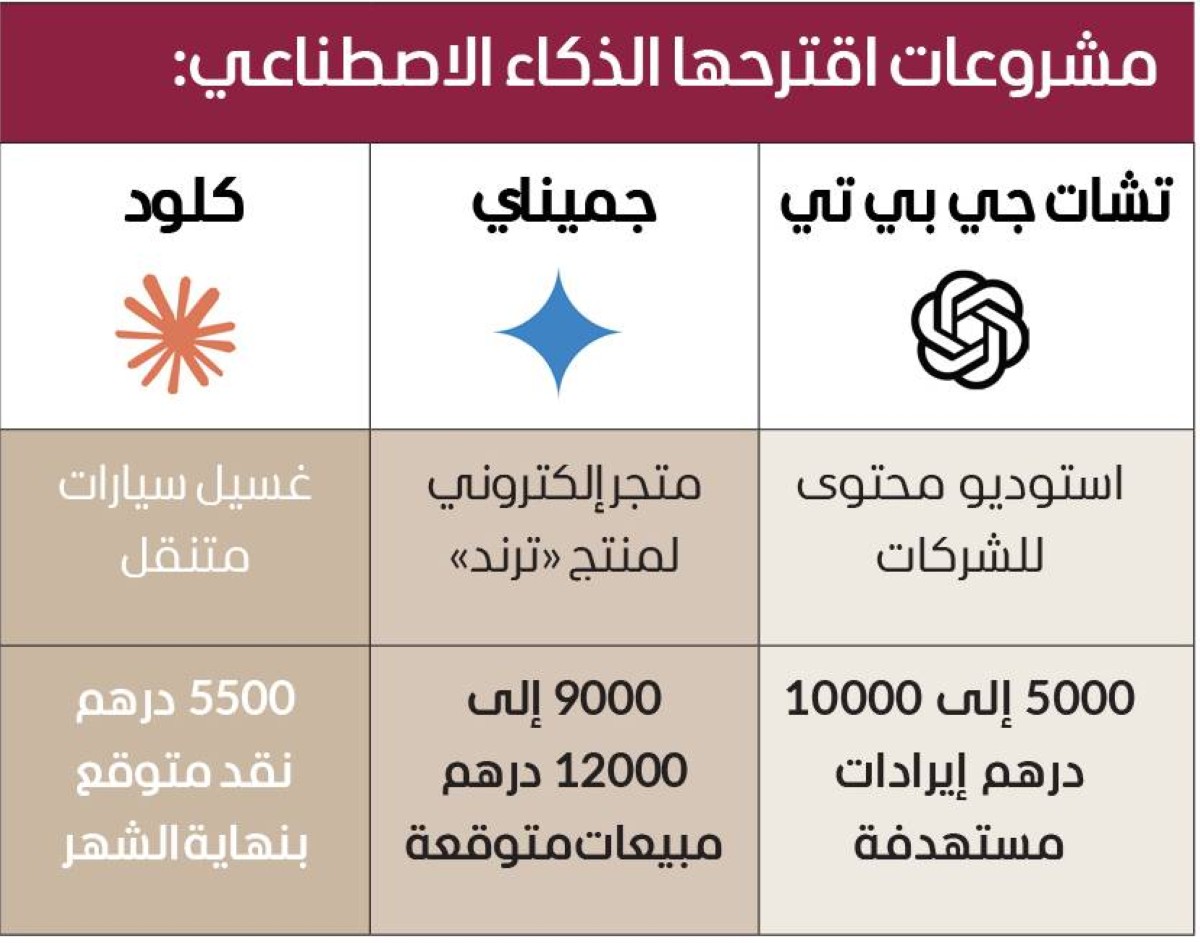
«البيان» وضعت ثلاثة من أشهر نماذج الذكاء الاصطناعي أمام التحدي نفسه: «تشات جي بي تي» و«جيميناي» و«كلود» من دون تحديد نوع المشروع أو طريقة إنفاق المبلغ، فكيف جاءت إجاباتهم؟ لقد جاءت مختلفة تماماً: محتوى للشركات، ومتجر إلكتروني لمنتج «ترند»، وغسيل سيارات متنقل، ولم يكن الاختلاف في المشروع فقط، بل في التعامل مع المال والمخاطرة؛ فالأول فضّل الاحتفاظ بالسيولة، والثاني أنفق رأس المال بحثاً عن نمو سريع، والثالث اشترى معدات يمكن أن تستمر في توليد الدخل.

«تشات جي بي تي»: العميل قبل الإنفاق

اختار «تشات جي بي تي» إنشاء استوديو مصغر لإنتاج المحتوى للمشروعات الصغيرة، واقترح باقة شهرية بسعر 1250 درهماً، تشمل 8 مقاطع فيديو قصيرة، و8 أفكار ونصوص للمحتوى، وجدولاً للنشر، وقرر ألا ينفق شيئاً في البداية، ووضع سقفاً عند 2500 درهم عند الحاجة: 600 للأدوات، و500 للنماذج وصفحة العرض، و700 للتسويق، و700 للتنقل والمصروفات، مع الاحتفاظ بالنصف الآخر من رأس المال.

وتقوم خطته على التواصل مع 100 مشروع للحصول على 4 عملاء، بإيرادات 5000 درهم، قد تصل إلى 10 آلاف درهم مع 8 عملاء، لكنه لم يعتبر هذه الأرقام مضمونة، وفضّل اختبار وجود عميل مستعد للدفع قبل الإنفاق.

«جيميناي»: نصف المال للإعلانات

في حين اختار «جيميناي» إنشاء متجر إلكتروني مصغر لمنتج رائج في السوق الإماراتية، على أن يستخدم الذكاء الاصطناعي لتحليل الاتجاهات، والعثور على منتج يجمع بين الطلب المرتفع والمنافسة الأقل.

وأنفق رأس المال بالكامل (5000 درهم) تقريباً: 2500 درهم للإعلانات على «تيك توك» و«إنستغرام»، و1500 للمنتج والتوصيل، و1000 لإنشاء متجر أو صفحة هبوط، مع استخدام الذكاء الاصطناعي أيضاً في إعداد الوصف والإعلانات ومقاطع الفيديو التسويقية.

وتوقع جيميناي تحقيق مبيعات بين 9 آلاف و12 ألف درهم خلال شهر، ثم إعادة استثمار العائد في توسيع المشروع، لكن هذه الأرقام تمثل إجمالي المبيعات وليست الأرباح؛ إذ يجب خصم تكاليف المنتج والإعلانات والتوصيل والتشغيل.

«كلود»: معدات تواصل العمل

أما «كلود» فقد ابتعد عن العالم الرقمي، واختار غسيل السيارات المتنقل، معتبراً أنه قادر على توليد دخل منذ الأسبوع الأول، ولا يحتاج إلى مخزون، كما يمكن تحويل العملاء إلى اشتراكات متكررة، وخصص 3100 درهم للمشروع: 1800 للمعدات، و800 للإعلانات، و500 للمنظفات والتشغيل، ليتبقى 1900 درهم، واقترح البدء بـ 5 سيارات بسعر مخفض، ثم استخدام صور «قبل وبعد» في التسويق، واستهداف منطقة محددة بالإعلانات، وبسعر 50 درهماً للغسلة الواحدة قدّر الإيرادات بنحو 3600 درهم خلال الشهر، وبإضافتها إلى الـ 1900 درهم المتبقية يصل المبلغ المتاح إلى 5500 درهم، إلى جانب المعدات التي يمكن استخدامها لاحقاً، كما راهن على تحسّن العائد في الشهر الثاني، ونبّه إلى ضرورة التحقق من التصاريح المنظمة للنشاط.

الحلقة الحاسمة

الإجابات السابقة تؤكد أن الذكاء الاصطناعي يستطيع اقتراح المشروع وحساب التكاليف ورسم طريق الربح، لكن الإنسان يبقى هو الحلقة الحاسمة؛ فهو من يقرر ويخاطر وينفذ ويتعامل مع السوق، إذ إن الإنسان هو من يحولها إلى مال حقيقي، بخاصة أن هذه الخطط ليست سوى اقتراحات قد تنجح أو تفشل عند اختبارها في السوق، لتبقى خبرة الإنسان وقدرته على اتخاذ القرار والتكيف مع المتغيرات هما العامل الحاسم في تحويل أفكار الذكاء الاصطناعي إلى مشروع حقيقي يحقق العائد.

تجارب واقعية

كما تكشف التجارب الواقعية عن أن الاستعانة بالذكاء الاصطناعي لا تضمن النجاح؛ ففي شهر يوليو الماضي ذكرت «وول ستريت جورنال» أن رائد الأعمال بن بروكا وصل بشركته - التي يديرها من دون موظفين مستعيناً بالذكاء الاصطناعي في عدد من المهام - إلى نحو 10 آلاف عميل يدفعون، وكانت في طريقها لتحقيق 10 ملايين دولار من الإيرادات خلال العام.

وفي المقابل أظهرت دراسة نُشرت في Management Science في العام الجاري - وشملت 640 رائد أعمال في كينيا، استخدم بعضهم مستشار أعمال يعتمد على نموذج GPT-4 - أن أصحاب المشروعات الأعلى أداء استفادوا بأكثر من 15%، بينما تراجع أداء أصحاب المشروعات الأقل أداء بنحو 8% إلى 10%؛ ما يؤكد أن الذكاء الاصطناعي قد يعزز أداء المشروع، لكنه لا يضمن نجاحه، وأن طريقة استخدام الإنسان لنصائحه تظل عاملاً حاسماً.
AIالذكاء الاصطناعيدراهم
الخبر متوفّر باللغات التالية:English
المصدر الأصلي للخبر
البيان

How can artificial intelligence found a project for 5000 AED?

September 25, 2026·Al Bayan
How can artificial intelligence found a project for 5000 AED?

What if artificial intelligence was given only AED 5,000 as capital and asked to establish a project that would generate income within a month? Would it take risks in search of quick returns or preserve the capital? And does it think like an entrepreneur or do its ideas flash on the screen but falter at the first test in the market?

Al Bayan put three of the most famous AI models to the same challenge: ChatGPT, Gemini and Claude without specifying the type of project or how to spend the amount. How did they respond? The answers were completely different: content for companies, an online store for a trending product, and mobile car washing. Not only was the difference in the project but also in dealing with money and risk; the first preferred to keep the liquidity, the second spent the capital in search of quick growth, and the third bought equipment that could continue generating income.

ChatGPT: The client before spending

ChatGPT chose to create a small studio for producing content for small businesses. It suggested a monthly package priced at AED 1,250, including eight short video clips, eight ideas and scripts for the content, and a publishing schedule. It decided not to spend anything initially and set a ceiling of AED 2,500 when needed: AED 600 for tools, AED 500 for models and landing page, and AED 700 for marketing, and AED 700 for transportation and expenses while keeping the other half of the capital.

His plan is to reach out to 100 projects in order to get four clients, with revenues of AED 5,000, which could rise to AED 10,000 with eight clients. However, he did not consider these figures as guaranteed and preferred to test the existence of a client willing to pay before spending.

“Gemini”: Half the money for advertising

While Gemini chose to create a small online store for a popular product in the UAE market, using artificial intelligence to analyze trends and find a product that combines high demand with less competition.

He spent almost all of his capital (AED 5,000): AED 2,500 on advertising on TikTok and Instagram, AED 1,500 for the product and delivery, and AED 1,000 to create a store or landing page. He also used artificial intelligence to set up descriptions, advertisements, and marketing videos.

Gemini expected sales of between AED 9,000 and AED 12,000 within a month, then reinvest the return in expanding the project. However, these figures represent total sales rather than profits; product costs, advertising, delivery, and operating expenses must be deducted.

"Cloud": Work communication equipment

"Cloud" has moved away from the digital world and chosen mobile car washing, considering that it can generate income since the first week without needing inventory. Customers can be converted into recurring subscriptions. He allocated AED 3100 for the project: AED 1800 for equipment, AED 800 for advertising, and AED 500 for cleaning supplies and operation, leaving AED 1900. He suggested starting with 5 cars at a discounted price, using "before and after" images in marketing, targeting a specific area with advertisements, and at AED 50 per wash, he estimated revenues of around AED 3600 per month. Adding this to the remaining AED 1900 brings the total available amount to AED 5500, along with equipment that can be used later. He also bet on an improved return in the second month and warned about the need to check the permits regulating the activity.

The crucial link

The previous answers confirm that artificial intelligence can propose a project, calculate costs, and map out the path to profit. However, humans remain the critical link; they are the ones who decide, take risks, execute, and interact with the market. It is humans who turn these plans into real money, especially since these plans are merely suggestions that may succeed or fail when tested in the market. Human expertise and ability to make decisions and adapt to changes remain the decisive factor in turning artificial intelligence ideas into a real project that generates returns.

Real-World Experiments

Real-world experiments reveal that relying on artificial intelligence does not guarantee success. Last July, the Wall Street Journal reported that entrepreneur Ben Brooka took his company—which he manages without employees and uses AI for various tasks—to around 10,000 paying customers and was on track to generate $10 million in revenue within the year.

Conversely, a study published in Management Science this year involving 640 entrepreneurs in Kenya, some of whom used a business consultant based on the GPT-4 model, found that high-performing entrepreneurs benefited by more than 15%, while low-performing entrepreneurs saw their performance decline by 8% to 10%. This confirms that AI can enhance project performance but does not guarantee success. The way humans utilize its advice remains a critical factor.

AIالذكاء الاصطناعيدراهم
This article is also available in:العربية
Original source article
Al Bayan