فاتورة المناخ (1).. لماذا تغير طعم القهوة وارتفع سعرها؟

16 يوليو 2026·اليوم السابع
فاتورة المناخ (1).. لماذا تغير طعم القهوة وارتفع سعرها؟

"تشرب قهوة".. اقتراح لم يعد بسيطا كما كان دائما، كلمتان تخبئان خلفهما الكثير من التفكير حول تكلفة هذا الكوب من القهوة ومدى جودته، لم تكن القهوة كذلك من قبل ولكن أسعارها ارتفعت الضعف مؤخرا ومذاقها أيضا اختلف، هذه تحديدا واحدة من الأمثلة الكثيرة على تكلفة تغير المناخ الذى نلمسه في حياتنا، فلم تقتصر أزمة المناخ على مجرد تقارير علمية، بل أصبحت "فاتورة يومية" ندفع قيمتها نقدًا من جيوبنا، وصحتنا، ومستقبلنا.

ربما تساءلت: لماذا أصبح فنجان قهوتك الصباحي أغلى سعراً وأقل جودة؟ ولكن هناك تساؤلات أخرى مهمة، على سبيل المثال: هل لاحظت مؤخراً أن فاتورة الكهرباء في الصيف باتت تلتهم جزءاً كبيراً من راتبك لمجرد رغبتك في "البقاء بارداً؟ هل وقفت في السوق متسائلاً بذهول عن سبب الارتفاع الجنوني بعض المنتجات، وكيف تاهت الفصول من مزارعينا؟

كل هذه ليست مجرد موجات غلاء عابرة، بل هي فاتورة المناخ التي بدأت الأرض تحرص على تحصيلها منا بانتظام وبدون تهاون، لذلك نقدم في هذه السلسلة "فاتورة المناخ" عدد من الحلقات الصحفية عن أكبر أزمة اقتصادية وإنسانية تواجه جيلنا.
أزمة_المناخ_وتكلفة_القهوة_العالمية
أزمة المناخ وتكلفة القهوة العالمية


تغير المناخ وتأثيره على كوب قهوتك

ناقش "أسبوع لندن للعمل المناخي" (LCAW)، تقاطع جوهري بين تغير المناخ والاقتصاد الكلي، يتمثل في التقلبات المتزايدة في إنتاج البن وأسعاره عالمياً، وما يترتب على ذلك من تداعيات عميقة على الدول وسبل العيش.

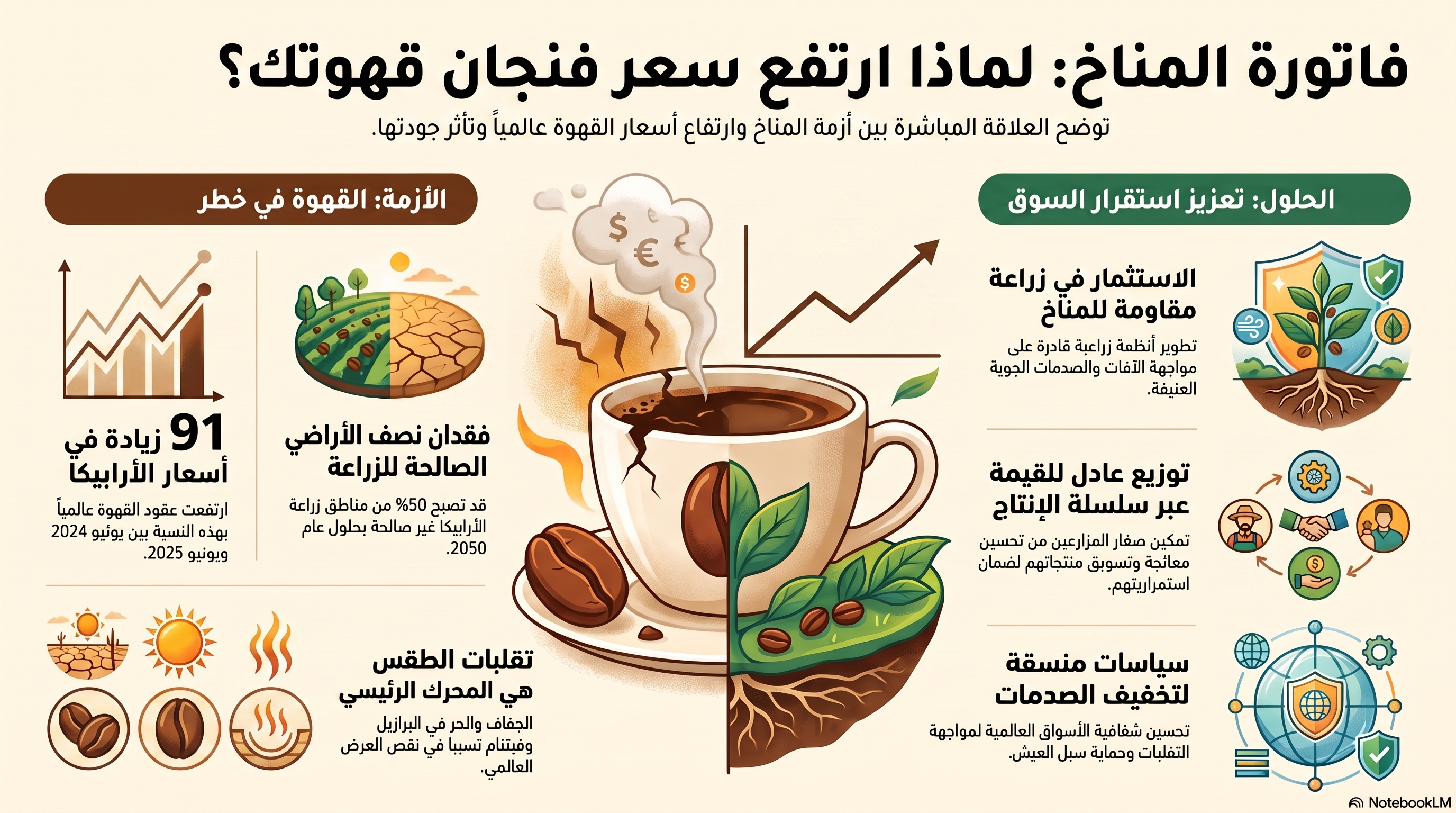
ووفقا لتحليل معهد التنمية الخارجية   (ODI)على موقعه الرسمي، ارتفع سعر عقود قهوة الأرابيكا في السوق العالمية بنحو 91% بين يوليو 2024 ويونيو 2025، ليصل إلى مستويات تاريخية، ولعل السبب الرئيسي هو تغير المناخ، من موجات الجفاف والحر والطقس غير المنتظم في البرازيل وفيتنام، أكبر منتجي البن في العالم.

وتشير دراسات إلى أنه بحلول عام 2050 قد تصبح أكثر من نصف الأراضي الحالية المناسبة لزراعة قهوة الأرابيكا غير صالحة إذا استمرت معدلات الاحترار الحالية، وهو ما يهدد استمرار ارتفاع الأسعار على المدى الطويل.

كيف يتحرك العالم لحل المشكلة؟

كشف تقرير جديد صادر عن منظمة الأغذية والزراعة للأمم المتحدة (الفاو)، أن الأسعار العالمية للبن والكاكاو والشاي شهدت تقلبات كبيرة مؤخراً، تفاقمت بسبب نقاط الضعف الهيكلية، وهو ما يسلط الضوء على الحاجة إلى تعزيز أنظمة الإنتاج، وتحسين شفافية السوق، ودعم توزيع أكثر توازناً للقيمة عبر سلسلة القيمة لتعزيز استقرار السوق وحماية سبل العيش.

قال بوبكر بن بلحسن، مدير قسم الأسواق والتجارة في منظمة الأغذية والزراعة للأمم المتحدة (الفاو): "في السنوات الأخيرة، ارتفعت أسعار المشروبات العالمية بوتيرة أسرع بكثير من أسعار السلع الزراعية الأخرى، فإن الجمع بين العرض المركز والاستهلاك العالمي المتزايد يخلق بيئة خصبة لتقلبات كبيرة في أسعارها الدولية، مضيفا، "لا تزال الصدمات المرتبطة بالطقس كالجفاف والصقيع والأمطار الغزيرة هي المحفزات الرئيسية لارتفاع الأسعار، وقد زادت أمراض النباتات وارتفاع تكاليف المدخلات والعمالة والتوترات الجيوسياسية وتأخيرات الشحن من الضغوط."

يدعو التقرير إلى اتخاذ إجراءات سياسية منسقة لمعالجة مواطن الضعف الهيكلية وتخفيف آثار الصدمات، فعلى مستوى الإنتاج، يعد تعزيز القدرة على الصمود أمرًا بالغ الأهمية، بما في ذلك من خلال الاستثمار في أنظمة زراعية مقاومة لتغير المناخ، وإدارة فعالة للآفات والأمراض، وتحسين أدوات إدارة المخاطر لتحقيق استقرار الإنتاج والدخل.

كما أن تمكين المنتجين من تطوير منتجاتهم ضمن سلاسل القيمة، بما في ذلك من خلال المعالجة والشهادات والعلامات التجارية، يمكن أن يزيد من حصتهم من القيمة ويعزز تنمية أكثر شمولًا واستدامة، وبدون هذه التدابير، ستظل أسواق السلع الأساسية للمشروبات العالمية عرضة للصدمات، مع استمرار المخاطر التي تهدد سبل عيش ملايين المزارعين، والأمن الغذائي، والاستقرار الاقتصادي في البلدان المنتجة.


قهوةمناختكلفة
الخبر متوفّر باللغات التالية:English
المصدر الأصلي للخبر
اليوم السابع

The Climate Bill (1).. Why has the taste of coffee changed and its price risen?

July 16, 2026·Youm7
The Climate Bill (1).. Why has the taste of coffee changed and its price risen?

"Do you drink coffee?" is no longer a simple question, as two words conceal much thought about the cost of this cup of coffee and its quality. Coffee has never been like this before, but prices have doubled recently, and its taste has also changed. This is just one example of the many costs of climate change that we experience in our lives. The climate crisis is not limited to scientific reports; it has become a "daily bill" that we pay with cash from our pockets, health, and future.

Perhaps you have wondered: why has your morning coffee become more expensive and of lower quality? But there are other important questions, for example: Have you recently noticed that the summer electricity bill is eating up a large part of your salary just because you want to "stay cool"? Have you stood in the market wondering in amazement about the crazy price increases of some products, and how the seasons have been lost from our farms?

All this is not just passing waves of inflation; it is the climate bill that the earth has started to collect from us regularly and without mercy. Therefore, we present in this series "The Climate Bill" a number of journalistic episodes about the biggest economic and humanitarian crisis facing our generation.

أزمة_المناخ_وتكلفة_القهوة_العالمية
Climate Crisis and the Cost of Global Coffee


Climate Change and its Impact on Your Cup of Coffee

The London Climate Action Week (LCAW) discussed a critical intersection between climate change and macroeconomics: the increasing volatility in coffee production and prices globally, with profound implications for countries and livelihoods.

According to an analysis by the Overseas Development Institute (ODI) on its official website, the price of Arabica coffee contracts in the global market rose by 91% between July 2024 and June 2025, reaching historic levels. The primary reason is climate change, with droughts, heatwaves, and irregular weather patterns in Brazil and Vietnam, the world's largest coffee producers.

Studies indicate that by 2050, more than half of the current land suitable for Arabica coffee cultivation may become unsuitable if current warming rates continue. This threatens the continued rise in prices over the long term.

How is the world moving to solve the problem?

A new report by the Food and Agriculture Organization of the United Nations (FAO) revealed that global prices for coffee, cocoa, and tea have experienced significant fluctuations recently, exacerbated by structural vulnerabilities. This highlights the need to strengthen production systems, improve market transparency, and support a more balanced distribution of value across the value chain to enhance market stability and protect livelihoods.

“In recent years, global beverage prices have risen much faster than other agricultural commodities,” said Boubker Ben Belkacem, Director of the Markets and Trade Division at the Food and Agriculture Organization of the United Nations (FAO). “The combination of concentrated supply and increasing global consumption creates a fertile environment for significant price fluctuations. Weather shocks such as droughts, frosts, and heavy rains remain key triggers for price increases, while plant diseases, rising input costs, labor costs, geopolitical tensions, and shipping delays have increased pressure.”

The report calls for coordinated policy actions to address structural vulnerabilities and mitigate the impact of shocks. At the production level, strengthening resilience is crucial, including through investment in climate-resilient agricultural systems, effective pest and disease management, and improved risk management tools to stabilize output and income.

Moreover, enabling producers to develop their products within value chains, including through processing, certification, and branding, can increase their share of the value and foster more inclusive and sustainable development. Without these measures, global commodity markets for beverages will remain vulnerable to shocks, with risks continuing to threaten the livelihoods of millions of farmers, food security, and economic stability in producing countries.


قهوةمناختكلفة
This article is also available in:العربية
Original source article
Youm7