اللجنة الوطنية للذكاء الاصطناعي المساعد تطلق دليلاً موحداً لتصميم خدمات حكومية مدعومة بالذكاء الاصطناعي المساعد - وكالة وام
21 أغسطس 2026·وكالة أنباء الإمارات
اللجنة الوطنية للذكاء الاصطناعي المساعد تطلق دليلاً موحداً لتصميم خدمات حكومية مدعومة بالذكاء الاصطناعي المساعد - وكالة وام

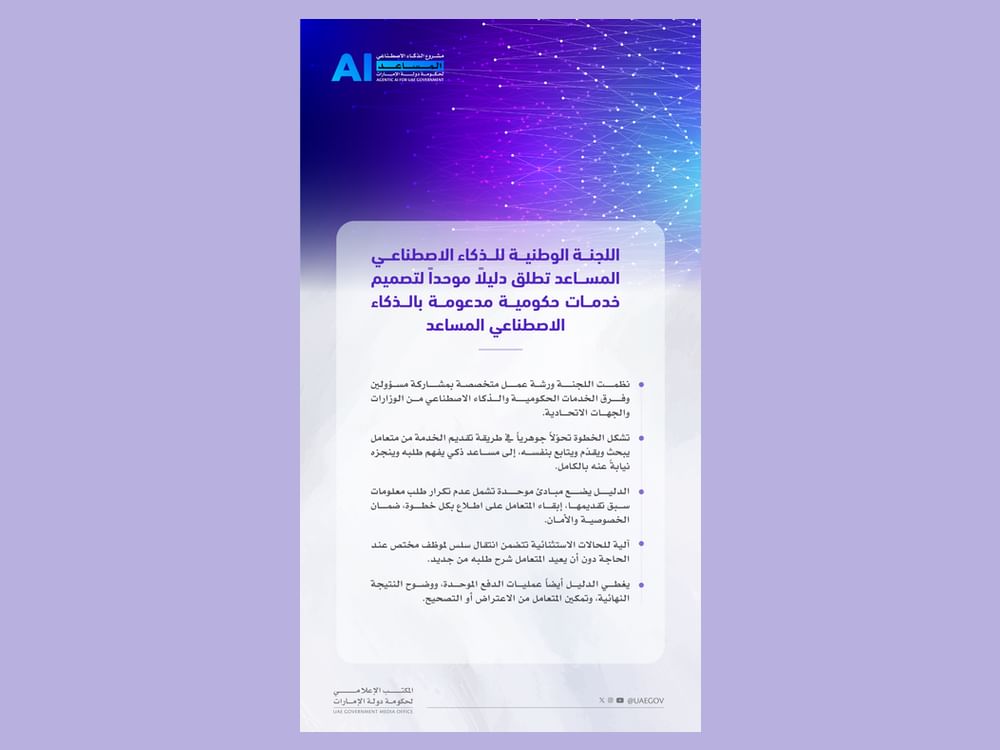
أبوظبى في 21 أغسطس/ وام/ أطلقت اللجنة الوطنية للذكاء الاصطناعي المساعد، "دليل تصميم التجارب الحكومية بالذكاء الاصطناعي المساعد"، الذي يوحّد آليات تطوير الخدمات الحكومية، وينقلها إلى خدمات تفهم المتعامل وتتفاعل معه وفق احتياجاته، وتتولى إنجاز طلبه نيابةً عنه.

جاء ذلك خلال ورشة عمل متخصصة نظمتها اللجنة بمشاركة مسؤولين وفرق الخدمات الحكومية والذكاء الاصطناعي في الوزارات والجهات الاتحادية، بهدف دعم الجهات في إعادة تصميم خدماتها بما ينسجم مع مستهدفات مشروع الذكاء الاصطناعي المساعد.

واستعرض سعادة محمد راشد بن طليعة، مساعد وزير شؤون مجلس الوزراء لشؤون التبادل المعرفي الحكومي، رئيس مسار الخدمات الحكومية في مشروع الذكاء الاصطناعي المساعد، خلال الورشة، أهم التغييرات التي سيحدثها الذكاء الاصطناعي المساعد في تجربة المتعامل، ومبادئ تصميم الخدمات الحكومية وفق الأسلوب الجديد.

وأوضح سعادته أنه في الطريقة الحالية يتحمل المتعامل مسؤولية البحث عن الخدمة، ومعرفة الجهة المسؤولة، وفهم المتطلبات، وتقديم المعلومات والوثائق، ومتابعة الإجراءات حتى اكتمال المعاملة، أما في الطريقة الجديدة، فيكتفي المتعامل بالحديث ومن ثم يتولى المساعد فهم الطلب، وتحديد الخطوات، وتنفيذها والتنسيق مع الجهات المعنية نيابةً عنه.

وقال إن المتعامل لا يريد سلسلة من الإجراءات، بل يريد نتيجة، لذلك، لا نقيس نجاح الذكاء الاصطناعي المساعد بعدد الرسائل التي يتبادلها مع المتعامل، وإنما بقدرته على إنجاز الخدمة والوصول إلى ما يريده، موضحا أن التحول الحقيقي لا يكمن في تغيير طريقة الحديث مع الحكومة فقط، بل في انتقال عبء تنفيذ الخدمة من المتعامل إلى الحكومة.

وأضاف سعادته أن الذكاء الاصطناعي المساعد الحقيقي يفهم ما يريده المتعامل، ويستخدم المعلومات المتوفرة لدى الحكومة، ويخطط لإنجاز الطلب، وينفذ الخطوات بنفسه، وينسق بين الجهات، ويتعامل مع الحالات الاستثنائية، وصولاً إلى نتيجة واضحة ومكتملة.

ويقدم الدليل إطاراً متكاملاً لتصميم تجارب المتعاملين بالذكاء الاصطناعي المساعد، يرتكز على مبادئ ومعايير تضمن بناء تجربة حكومية مترابطة، تبدأ من فهم حاجة المتعامل ولا تنتهي إلا بتحقيق ما يريده.

وتشمل المبادئ تمكين المتعامل من التعبير عن حاجته بسهولة ووضوح، وفهم ما يقصده قبل بدء الإجراءات، والاستفادة من البيانات المتوفرة لدى الحكومة بحيث لا يُطلب منه تقديم معلومات أو وثائق سبق أن قدّمها لأي جهة حكومية من قبل.

كما تشمل توضيح خطوات الإنجاز للمتعامل، والحصول على موافقته قبل اتخاذ أي إجراء، وتنفيذ الخدمة عبر الأنظمة الحكومية، ومتابعة الطلب حتى اكتماله، وإبقاء المتعامل على اطلاع بما تم إنجازه وما يحتاج تدخله فيه، مع ضمان تجربة آمنة تحافظ على خصوصيته.

ويتناول الدليل أيضاً كيفية التعامل مع الحالات الاستثنائية أو الأعطال التقنية، وضمان الانتقال السلس إلى موظف مختص عند الحاجة، مع نقل كامل تفاصيل الطلب والخطوات المنجزة، حتى لا يضطر المتعامل لإعادة شرح طلبه من جديد.

ويغطي الدليل إتمام عمليات الدفع بشكل موحد وآمن، وتقديم نتيجة واضحة للمتعامل، وتمكينه من السؤال أو التصحيح أو الاعتراض، إلى جانب تقييم تجربته والاستفادة من ملاحظاته لتحسين الخدمة باستمرار.

AIgovernmentguidelines
الخبر متوفّر باللغات التالية:English
المصدر الأصلي للخبر
وكالة أنباء الإمارات

The National Committee for Artificial Intelligence Assistants launches a unified guide to design AI-assisted government services - WAM

August 21, 2026·WAM
The National Committee for Artificial Intelligence Assistants launches a unified guide to design AI-assisted government services - WAM

Abu Dhabi, August 21 (WAM) - The National Committee for Artificial Intelligence Assistant launched the "Design Guide for AI-Powered Government Experiences", which unifies mechanisms for developing government services and transforms them into services that understand and interact with users based on their needs, and complete their requests on their behalf.

This was during a specialized workshop organized by the committee in collaboration with officials and teams from government services and artificial intelligence units in federal ministries and authorities to support agencies in redesigning their services in line with the objectives of the AI Assistant project.

During the workshop, His Excellency Mohammed Rashid Al Tليعة, Assistant Minister for Government Knowledge Exchange Affairs and Head of the Government Services Track in the Artificial Intelligence Assistant Project, reviewed the most significant changes that AI assistants will bring to user experiences, as well as the principles of designing government services according to the new approach.

He explained that under the current method, users are responsible for searching for the service, identifying the relevant authority, understanding requirements, providing information and documents, and following up on procedures until the transaction is completed. In the new method, however, users only need to speak, after which the assistant takes over by understanding the request, determining steps, executing them, and coordinating with relevant authorities on their behalf.

He said that the customer does not want a series of actions, but rather wants a result. Therefore, we do not measure the success of AI assistants by the number of messages exchanged with the customer, but by its ability to complete the service and achieve what it wants. He explained that the real transformation is not just in changing how one talks to the government, but in shifting the burden of implementing services from the customer to the government.

He added that a true AI assistant understands what the customer wants, uses available information from the government, plans to fulfill the request, implements steps itself, coordinates between entities, handles exceptional cases, and reaches a clear and complete result.

The guide provides an integrated framework for designing experiences of customers with AI assistants, based on principles and standards that ensure building a cohesive government experience. It starts by understanding the customer's needs and ends by achieving what they want.

The principles include enabling the customer to express their need easily and clearly, understanding what they mean before starting procedures, and utilizing data available from the government so as not to request information or documents that have already been provided to any government entity. It also includes clarifying the steps of completion for the customer, obtaining their consent before taking any action, implementing services through government systems, following up on requests until completion, keeping the customer informed about what has been achieved and where intervention is needed, while ensuring a secure experience that preserves their privacy.

The guide also covers how to handle exceptional cases or technical failures, ensuring a smooth transition to a specialized staff member when needed, with full transfer of the order details and steps completed, so that the customer does not have to explain their request again.

The guide covers completing payment processes in a unified and secure manner, providing a clear result for the customer, enabling them to ask, correct or object, along with evaluating their experience and benefiting from their feedback to continuously improve the service.

AIgovernmentguidelines
This article is also available in:العربية
Original source article
WAM