مادة خارقة تتحدى النحاس.. ثورة جديدة في رقائق الكمبيوتر
19 يوليو 2026·البيان
مادة خارقة تتحدى النحاس.. ثورة جديدة في رقائق الكمبيوتر

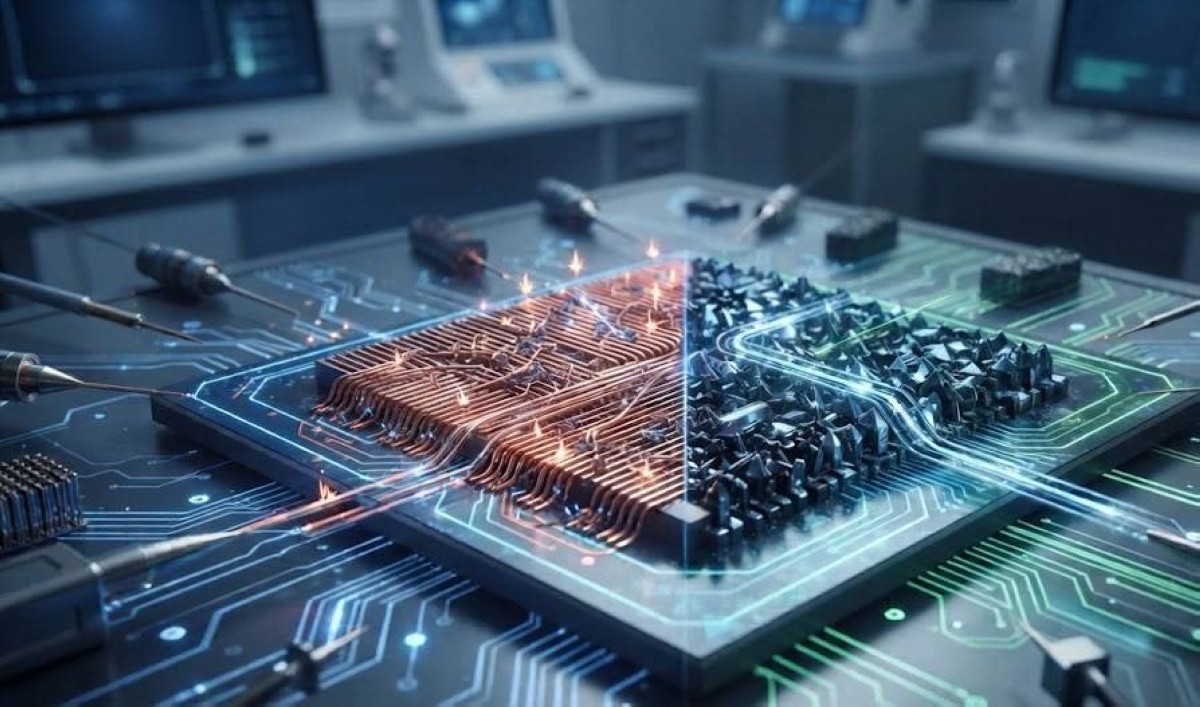
في سباق الوصول إلى رقائق إلكترونية أصغر وأسرع، يواجه النحاس الذي ظل لعقود العمود الفقري لتوصيلات المعالجات تحديًا غير مسبوق، بعدما نجح علماء أمريكيون في تطوير مادة كمومية مبتكرة تُظهر قدرة استثنائية على نقل الكهرباء عند أحجام النانو. وطوّر الباحثون أسلاكًا نانوية من مادة "زرنيخيد النيوبيوم" يمكنها التفوق على النحاس المستخدم حاليًا في ربط مكونات رقائق الكمبيوتر الدقيقة، ما يفتح الباب أمام جيل جديد من الشرائح الإلكترونية الأكثر كفاءة وسرعة، وربما يعيد رسم مستقبل صناعة الحوسبة.

وأثبت الباحثون من جامعة كورنيل أن هذه المادة الكمومية الغريبة لا تفقد كفاءتها عند تقليص حجمها، بل تصبح أكثر قدرة على نقل الكهرباء كلما أصبحت أرق، وهو عكس ما يحدث مع النحاس الذي تبدأ مقاومته بالارتفاع عند وصول الأسلاك إلى المقاييس النانوية.

وتُعد الوصلات الكهربائية داخل الرقائق عنصرًا أساسيًا في عمل المعالجات الحديثة، إذ تنقل الإشارات بين الترانزستورات. ورغم اعتماد صناعة أشباه الموصلات على النحاس منذ أواخر التسعينيات بسبب موصليته العالية، فإن استمرار تصغير حجم الرقائق كشف عن مشكلة كبيرة؛ فالإلكترونات في الأسلاك النحاسية فائقة الصغر تصطدم بالأسطح أكثر، ما يزيد المقاومة ويقلل كفاءة نقل الطاقة.

لكن زرنيخيد النيوبيوم (NbAs) ينتمي إلى فئة المواد الكمومية الطوبولوجية، حيث تتحرك الإلكترونات على سطحه بسرعة كبيرة وبطريقة تقلل فقدان الطاقة. ومع انخفاض حجم السلك، تصبح هذه التأثيرات السطحية أقوى، ما يمنح المادة قدرة استثنائية على التوصيل.

ولتصنيع هذه الأسلاك فائقة الدقة، استخدم الفريق تقنية التشكيل النانوي الحراري الميكانيكي التي أتاحت إنتاج أسلاك أحادية البلورة بأقطار تصل إلى نحو 10 نانومترات، مع إمكانية دمجها مستقبلًا في رقائق السيليكون، وفقا لموقع "interestingengineering.".

ويرى الباحثون أن هذا الاكتشاف قد يفتح الباب أمام جيل جديد من الشرائح الإلكترونية الأسرع والأكثر كفاءة في استهلاك الطاقة، خاصة مع اقتراب النحاس من حدوده الفيزيائية في سباق تصغير الأجهزة.

الدراسة نُشرت في مجلة "ساينس" العلمية، وقد تمثل خطوة مهمة نحو إعادة تصميم الأسلاك التي تشغّل تقنيات المستقبل.

computer chipssemiconductorsinnovation
الخبر متوفّر باللغات التالية:English
المصدر الأصلي للخبر
البيان

Super Material Challenges Copper: A New Revolution in Computer Chips

July 19, 2026·Al Bayan
Super Material Challenges Copper: A New Revolution in Computer Chips

In the race to develop smaller and faster electronic chips, copper, which has been the backbone of processor connections for decades, is facing an unprecedented challenge. American scientists have developed an innovative quantum material that shows exceptional ability to conduct electricity at the nanoscale. Researchers have developed nanowires made from “niobium arsenide” that can outperform the copper currently used to connect components in microcomputer chips, opening the door to a new generation of more efficient and faster electronic chips, and possibly reshaping the future of computing.

Researchers at Cornell University have proven that this strange quantum material does not lose its efficiency when scaled down; instead, it becomes even better at conducting electricity as it gets thinner. This is the opposite of what happens with copper, where resistance begins to rise as wires approach nanoscale dimensions.

Electrical connections within chips are essential for the operation of modern processors, as they transmit signals between transistors. Although the semiconductor industry has relied on copper since the late 1990s due to its high conductivity, the continued miniaturization of chips has revealed a major problem: electrons in ultra-thin copper wires collide with surfaces more frequently, increasing resistance and reducing energy transfer efficiency.

But niobium arsenide (NbAs) belongs to a class of topological quantum materials, where electrons move on its surface at high speeds in a way that minimizes energy loss. As the size of the wire decreases, these surface effects become stronger, giving the material an extraordinary ability to conduct electricity.

To manufacture these ultra-fine wires, the team used thermal mechanical nanoforming technology which allowed them to produce single crystal wires with diameters up to about 10 nanometers, and they can be integrated into silicon chips in the future, according to "interestingengineering."

The researchers believe that this discovery could open the door for a new generation of electronic chips that are faster and more energy efficient, especially as copper approaches its physical limits in miniaturization.

The study was published in the journal Science and may represent an important step towards redesigning wires that power future technologies.

computer chipssemiconductorsinnovation
This article is also available in:العربية
Original source article
Al Bayan