إعلانات "ثردز" المستمرة من "مستر بيست" جزء من شبكة احتيال العملات المشفرة الضخمة
2 يوليو 2026·إنجاجيت
إعلانات "ثردز" المستمرة من "مستر بيست" جزء من شبكة احتيال العملات المشفرة الضخمة

تدفق لقطات الشاشة منخفضة الدقة لا يزال يتهرب من فرض الإشراف على التعديل.

بقلم كاريسا بيل 2 يوليو، 2026 9:00 ص EST لقطات شاشة عبر الخيوط

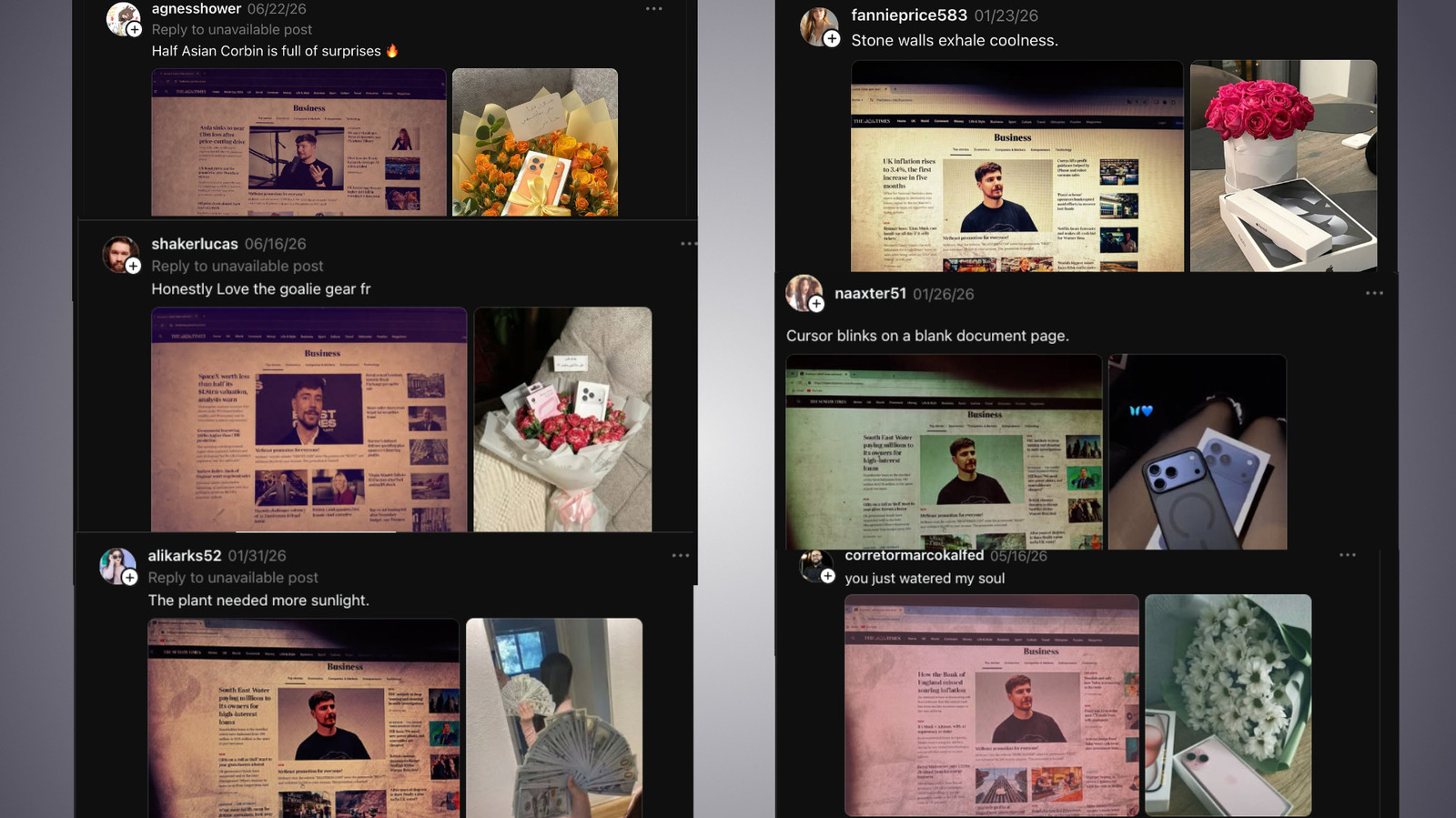
إذا قمت بقضاء أي وقت في تطبيق خيوط ميتا خلال العام الماضي، فمن المحتمل أنك رأيت ما أحب أن أسميه "ردود رجال السيد بيست": يقوم حساب مزعج بالرد على منشور شهير بعبارة غير منطقية ولقطة شاشة منخفضة الجودة من صحيفة التايمز البريطانية تعرض قصة خيالية عن السيد بيست. عادةً ما يكون هناك صورة ثانية، تبدو عشوائية، - غالبًا ما تكون باقة من الزهور مع آيفون. الصيغة لها بعض الاختلافات الطفيفة، ولكن هذه المنشورات موجودة في كل مكان.

مثل الكثير من الرسائل المزعجة على وسائل التواصل الاجتماعي، فهي جزء من عملية احتيال عملة مشفرة ضخمة.

وفقًا لتحليل زاك إدواردز، باحث أمني في فريق Infoblox، فإن الشخص أو المجموعة وراء هذه الحسابات تدير أكثر من 10,000 موقع "كازينو عملة مشفرة" خبيث. حدد Engadget عشرات الحسابات التي تنشر رسائل مزعجة ردًا على السيد بيست على الخيوط، وقد حقق بعضها مئات الآلاف من المشاهدات خلال الأيام الثلاثين الماضية. جميع الحسابات تروج لمواقع ويب حدد إدواردز أنها جزء من نفس الشبكة.

في حين يستخدم المحتالون باستمرار تكتيكات جديدة للإيقاع بالناس في مخططات مالية، وفقاً لكل من إدواردز ومارك بيير، رئيس قسم المستهلكين في منصة كشف الاحتيال Malwarebytes، فإن الطريقة التي تم بها نشر هذه المنشورات على منصة Threads غير عادية. أولاً، لا تحتوي المنشورات على روابط واضحة للاحتيالات التي يروجون لها. حتى العبارات الغريبة التي تظهر بجانب الصور، مثل "تموجات شفرات القلم مثل الأفكار"، لا تبدو كمحتوى احتيال العملات المشفرة السريع الذي يتعرض له العديد من مستخدمي وسائل التواصل الاجتماعي بشكل متكرر. ولكن إذا نظرت عن كثب إلى لقطات الشاشة المزيفة، ستجد أن كل صورة منخفضة الدقة للمؤثر على يوتيوب مصحوبة بقصة أخبار مزيفة تدعي أنه يطلق "مشروعًا" أو "ترويجًا" جديدًا ويعطي المال إذا قمت بزيارة موقع إلكتروني مشبوه.

لقطة شاشة عبر Threads

يعتقد إدوارتس أن العادات الغريبة لحسابات المنشورات هي جهد لتجنب الكشف من قبل أنظمة ميتا واختبار الإجهاد لأنواع المنشورات الأكثر احتمالاً للحصول على وضوح. "هذه الشبكة وحش للاختبار A/B"، قال لـ Engadget، مشيراً إلى قدرتهم على تجربة تباينات مختلفة لنفس المحتوى لتحديد أيها أكثر فعالية. "ربما اكتشف هؤلاء الفاعلون أن مجالاتهم يتم التقاطها بسرعة كبيرة عندما يدمجونها في المنشور، لذا فقد حاولوا هذه العملية الغريبة التي تخفي المجال وتجعل الشخص يشعر وكأنه صيد الكنز. إذا كنت تروج لصورة فقط وهناك عنوان URL غامض لا يبرز بشكل كبير، قد تفوت العديد من أنظمة الذكاء الاصطناعي [الكشف]."

يبدو أن منظمي الاحتيال الذين ردوا على "مستر بيست" اكتشفوا أيضًا كيفية تحسين رسائل البريد العشوائي الخاصة بهم لتتناسب مع الخصائص الفريدة الخوارزمية لموقع "ثردز". الرد على المنشورات الشهيرة استراتيجية مثبتة لكسب الانتشار على "ثردز"، حيث صرحت شركة ميتا أن نصف المشاهدات على "ثردز" تأتي من الردود. من المرجح أن تكون العبارات غير المعقولة والصور المنخفضة الدقة، والتي غالبًا ما تتطلب تكبير الصورة لمشاهدتها بشكل صحيح، تجذب المزيد من المستخدمين للبقاء على المنشورات. قد ينتهي كل ذلك إلى وصفة لتلقي بعض التعزيز الخوارزمي.

يقول مارك بيير، رئيس قسم المستهلك في منصة كشف الاحتيال "مالويربايتس": "إنهم يحاولون تغذية خوارزمية، ولكل منصة خوارزميتها الخاصة". على الرغم من أن بيير لم يكن على دراية بهذه الشبكة المحددة من المحتالين المشفرين، إلا أنه لم يفاجأ بتركيزهم الواضح على "مستر بيست". يقول إن "مستر بيست" أصبح الآن أحد أكثر الشخصيات العامة شيوعًا في الاحتيال، مع تجاوز عدد الإشارات إلى قنوات "يوتيوب" الخاصة به عدد الإشارات إلى شخصيات شهيرة أخرى مثل إيلون ماسك.

لقطة شاشة

يقول إدوارز أن العديد من هذه المواقع الاحتيالية (مثل الموقع أعلاه) تدير عمليات احتيال بسيطة للإيداع. تَعِدُ هذه المواقع بنوع من "المكافأة المجانية" أو مكافأة التسجيل لإغراء الناس بإنشاء حسابات. بمجرد تسجيلهم والحصول على أرصدتهم الترويجية - أطلق أحد المواقع التي زارها Engadget عليها اسم "أموال مجانية" - يتم تقديم مجموعة من آلات القمار عبر الإنترنت وغيرها من الألعاب البسيطة لهم. تدعي هذه المواقع أن المستخدمين يمكنهم سحب الأموال وإيداعها في أي وقت، مما يغري المستخدمين بالتخلي عن معلومات بطاقات الائتمان أو ربط محافظ العملات المشفرة.

بعد إدخال رمز ترويجي مزعوم من رسائل البريد العشوائية الخاصة بـ Mr Beast في أحد هذه المواقع، أُبلغت بأنني "من بين الفائزين في حملة مكافأة الحدث بقيمة 10 ملايين دولار" وفزت بمبلغ 3000 دولار. لسحب هذه المكاسب سيتطلب فقط عنوان محفظة أو رقم بطاقة ائتمان. هذا يتناسب مع النمط الذي وصفه إدوارز.

"عادة ما يكون الأمر: التسجيل للحصول على مكافأة الإيداع، ثم يبدأون في إخبارك بعوائد وهمية، ثم يشجعونك على إيداع المزيد من المال"، كما يوضح. "إنهم لا يبحثون حقًا عن عمليات احتيال طويلة الأمد، بل يبحثون عن رهانات سريعة."

ليس من الواضح عدد الأشخاص الذين قد يقعون في هذه الخدع. يُظهر تحليل أكثر من 10,000 نطاق تم جمعها بواسطة إدواردز أن العديد من هذه الكازينوهات المشفرة المفترضة تشهد حركة مرور ضئيلة للغاية. لكن على "ثريدز"، حصل عدد قليل من الحسابات التي تنشر ردود "مستر بيست" على سبام على ما يقرب من مليون مشاهدة في الأيام الثلاثين الماضية، وفقًا لمقاييس العرض العامة لـ "ثريدز". يبدو أن بعض هذه الحسابات كانت حسابات مخترقة لمستخدمين عاديين، بينما كانت حسابات أخرى جديدة نسبيًا ويبدو أنها لا تهدف إلى شيء سوى الترويج لمواقع الكازينو. كما نشر عدد قليل منها بشكل متكرر مقاطع فيديو إباحية مدتها نصف ثانية تربط بقنوات "تيليجرام" التي تعلن عن "فيديوهات ثريدز الساخنة 18+". (من المثير للاهتمام أن المنشورات التي تحتوي على مقاطع الفيديو الإباحية لا تظهر في تطبيق "ثريدز"، على الرغم من أنها مرئية على threads.com.)

لقطة شاشة

يشك إدواردز، الذي قام بتتبع حملات مماثلة على مواقع أخرى، في أن المحتالين يعملون على منصات بخلاف ثريدز. تحمل منشورات ثريدز بعض أوجه التشابه مع موجة البريد العشوائي التي استهدفت ديسكورد العام الماضي، وهناك تداخل بين النطاقات الخبيثة التي تم الترويج لها على المنصتين. كما لاحظ أن العديد من أحدث المواقع التي اكتشفها تحتوي على إعلانات X مدمجة بالإضافة إلى بكسل ميتا، الذي يسمح لمعلني فيسبوك بتتبع كيفية استخدام الناس لمواقعهم. "أنا واثق من إنفاقهم مبالغ كبيرة من المال على الإعلانات"، يقول.

ما ليس واضحًا هو إلى أي مدى تدرك ميتا مشكلة البريد العشوائي التي تركز على السيد بيست. في حين أن الشركة تبدو وكأنها تقوم بإزالة بعض الحسابات المرتبطة بهذه المجموعة، فإن تكرار ظهور هذه المنشورات يثير تساؤلات حول مدى فعالية إنفاذها.

ظهرت لقطات الشاشة لقسم الأعمال المزيف في صحيفة ذا تايمز لأكثر من عام. حتى أنها أصبحت مادة للضحك بين الموظفين. قال أحد المستخدمين في أبريل/نيسان: "هل تعتقد أن منشورك حقق نجاحًا عندما تبدأ في تلقي تعليقات مزعجة من السيد بيست". وفي وقت سابق من هذا الشهر، نشر أحدهم قائلاً: "استيقظ يا صديقي! لقد ظهرت تعليقات جديدة مزعجة من السيد بيست"، عند ظهور نسخة جديدة من لقطة شاشة السيد بيست - هذه المرة تعرض مقالًا مزيفًا من سي إن إن.

قال إدواردز وبير كل من إدواردز وبير أن ميتا يجب أن تكون قادرة على اكتشاف هذه الأنواع من الحملات، حتى لو كان المحتالون يستخدمون تقنيات التخفي لإخفاء عناوين URL التي يروجون لها. لم تقدم ميتا تعليقًا لموقع Engadget عند نشر هذا المقال.

يقول بير: "تتمتع ميتا بنماذج كشف ذكاء اصطناعي رائعة، ولديها نموذج جيد جدًا لذلك على فيسبوك". "إن الأمر يتعلق بمسألة الأولوية فقط. إذا كانت هذه الأساليب لا تزال ناجحة وتعمل لفترة طويلة، فهذا يعني... أنها لم تحصل على الأولوية لإصلاحها."

ThreadsMr Beastcrypto
الخبر متوفّر باللغات التالية:English
المصدر الأصلي للخبر
إنجاجيت

Threads' ubiquitous Mr Beast spam is part of a massive crypto scam network

July 02, 2026·Engadget
Threads' ubiquitous Mr Beast spam is part of a massive crypto scam network

The deluge of low-res screenshots continue to evade moderation enforcement.

By Karissa Bell July 2, 2026 9:00 am EST Screenshots via Threads

If you've spent any time on Meta's Threads app in the last year, then you've likely seen what I like to call "the Mr Beast reply guys:" A spam account replies to a popular post with a nonsensical phrase and a low-quality screenshot of the British newspaper The Times featuring a fictitious story about Mr Beast. There's usually a second, seemingly random, image — often a bouquet of flowers with an iPhone. The formula has some minor variations, but these posts are absolutely everywhere.

Like so much spam on social media, it's part of a massive crypto scam.

According to an analysis from Zach Edwards, a staff security researcher at Infoblox, the person or group behind these accounts is running more than 10,000 malicious "crypto casino" websites. Engadget identified dozens of accounts posting Mr Beast reply spam on Threads, some of which have racked up hundreds of thousands of views over the last 30 days. All of the accounts were promoting websites that Edwards identified as being part of the same network.

While scammers are constantly using new tactics to lure people into financial schemes, according to both Edwards and Mark Beare, head of consumer at scam detection platform Malwarebytes, the way these posts have played out on Threads is unusual. For one, the posts don't contain obvious links to the scams they're promoting. Even the strange phrases that appear alongside the images, like "pencil shavings curl like thoughts," don't read like the typical get-rich-quick crypto scam content many social media users frequently encounter. But look closely at the faked screenshots and you'll find that every low-res photo of the YouTuber is accompanied by a fake news story claiming that he's launching a new "project" or "promotion" and giving away money if you visit a sketchy website.

Screenshot via Threads

Edwards believes the accounts' bizarre posting habits are an effort to both evade detection by Meta's systems and stress-test the types of posts most likely to gain visibility. "This network is a monster for A/B testing," he told Engadget, referring to their ability to try different variations of the same content to determine which is more effective. "These threat actors have potentially figured out that their domains are being picked up too quickly when they embed them in the post, so they've tried this weird process where you bury the domain and you make the person sort of feel like it's a scavenger hunt. If you're promoting just an image and there's an obscure URL that's not even super prominent, a lot of these AI [detection] systems may miss it."

The Mr Beast reply scammers seem to have also discovered how to optimize their spam for the unique quirks of the Threads algorithm. Replying to popular posts is a proven strategy for gaining visibility on Threads; Meta has said that half of the views on Threads come from replies. The nonsensical phrases and low-res screenshots, which often require you to enlarge the image to view it properly, are likely drawing more users to linger on the posts. All that could end up being a recipe for receiving some algorithmic amplification.

"They're trying to feed an algorithm, and each platform has a different algorithm," says Mark Beare, head of consumer at scam detection platform Malwarebytes. While Beare said he wasn't familiar with this particular network of crypto scammers, he wasn't surprised by their seeming fixation on Mr Beast. Mr Beast, he says, is now one of the most ubiquitous public figures in scams, with mentions of the YouTuber outnumbering other frequently-cited celebrities like Elon Musk.

Screenhot

Many of these scam websites (like the one above) are running simple deposit scams, says Edwards. The sites promise some kind of "free reward" or sign-up bonus in order to entice people to make accounts. Once they've signed up and gotten their promotional credits — one website Engadget visited labeled it "free money" — they're presented with a bevy of online slot machines and other simple games. The websites claim users can withdraw and deposit funds at any time, enticing users into giving up credit card information or connecting crypto wallets.

After entering a supposed promo code from the Mr Beast spam into one of these sites, I was informed that I was "among the winners of our $10M Bonus Event promotion" and had won $3,000. Withdrawing these winnings would only require a wallet address or credit card number. That fits the pattern described by Edwards.

"It's usually: sign up for your deposit bonus, and then it starts to tell you fake returns, and then they're encouraging you to deposit more money," he explains. "They're not really looking for long cons, they're looking for quick stakes."

It's not clear how many people might be falling for these scams. Analysis of the more than 10,000 domains collected by Edwards shows that many of these supposed crypto casinos are seeing very little traffic. But on Threads, a handful of accounts posting Mr Beast reply spam have gotten nearly a million views in the last 30 days, according to Threads' public-facing view metrics. Some of these accounts appeared to have been the hacked accounts of normal users, while others were relatively new accounts that seemed to have little purpose beyond promoting the casino sites. A few also frequently posted half-second porn clips linking to Telegram channels that advertise "Threads Hot Video 18+." (Interestingly, the posts with porn clips do not appear in the Threads' app, though they are visible on threads.com.)

Screenshot

Edwards, who has tracked similar campaigns on other sites, suspects the scammers are active on platforms besides Threads. The Threads posts bear some similarities to a wave of spam that targeted Discord last year, and there is some overlap between the malicious domains promoted on both platforms. He also noted that many of the latest websites he uncovered have X ads integrated as well as the Meta Pixel, which allows Facebook advertisers to track how people are using their websites. "I'm confident that they're spending significant amounts of money on ads," he says.

What's not clear is to what extent Meta is aware of its Mr Beast-centric spam problem. While the company does seem to be taking down some of the accounts linked to this group, the frequency with which these posts appear raise questions about how effective its enforcement is.

The screenshots of the fake Business section of The Times have been appearing for over a year. It's even become something of an inside joke on the platform. "Anyone else think your post has 'made it' when you start getting the Mr Beast spam comments," one user said in April. "Babe, wake up! New Mr Beast spam has dropped," someone posted earlier this month when a new variation of the Mr Beast screenshot — this one showing a fake CNN article — appeared.

Both Edwards and Beare said that Meta should have the ability to detect these types of campaigns, even if scammers are using stealthy techniques to hide the URLs they're promoting. Meta did not provide comment to Engadget by the time of this article's publication.

"Meta has great AI detection models, they have a very, very good model for that on Facebook," Beare says. "It really just comes down to a matter of priority. If these tactics still work and they work for a very long time, it means ... they haven't been prioritized to be fixed."

ThreadsMr Beastcrypto
This article is also available in:العربية
Original source article
Engadget