لغز مريخي.. عجلات "كيوريوسيتي" تكشف مفاجأة مدفونة منذ مليارات السنين
11 يوليو 2026·البيان
لغز مريخي.. عجلات "كيوريوسيتي" تكشف مفاجأة مدفونة منذ مليارات السنين

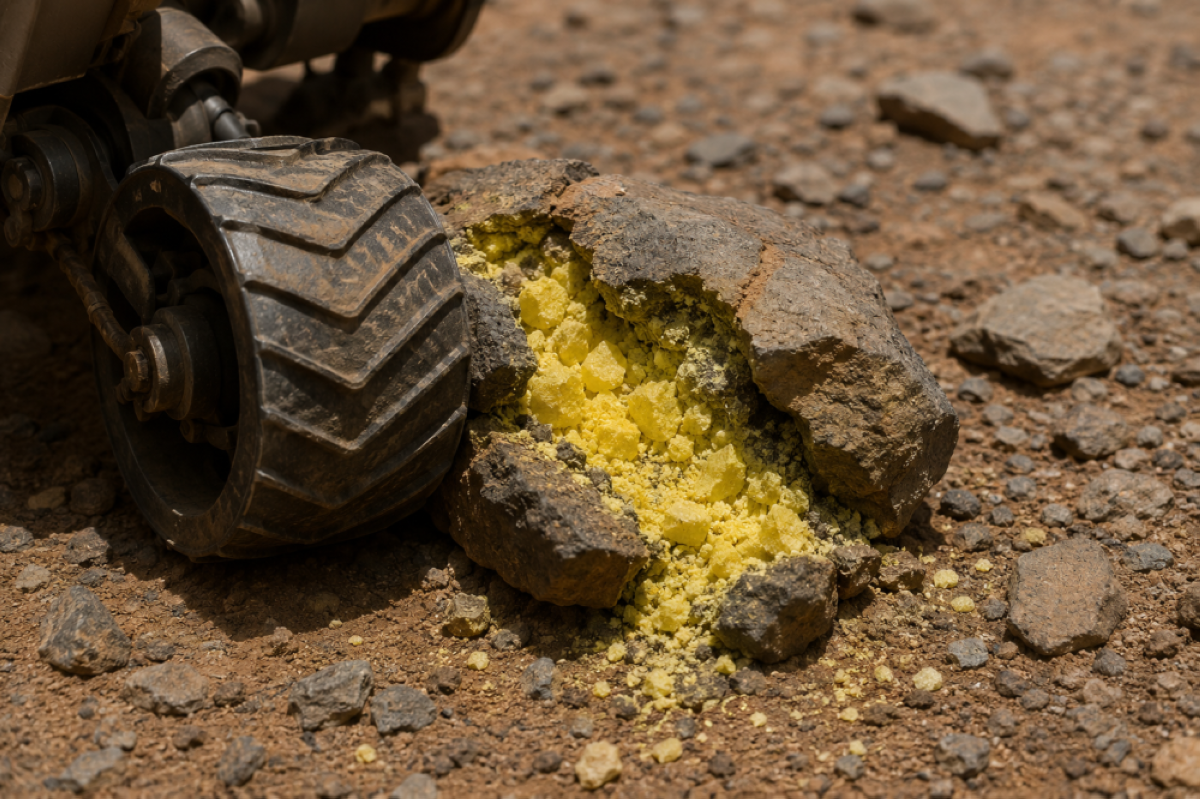
في اكتشاف غير متوقع قد يغير فهم العلماء للتاريخ الجيولوجي للمريخ، كشفت مركبة "كيوريوسيتي" التابعة لوكالة ناسا عن بلورات من الكبريت العنصري داخل صخرة تحطمت تحت إحدى عجلاتها أثناء تحركها على سطح الكوكب الأحمر، في منطقة لم يكن يتوقع الباحثون العثور فيها على هذا العنصر بهذا الشكل.

وجاء الاكتشاف خلال مواصلة المركبة رحلتها الاستكشافية عبر المنحدرات السفلى لجبل شارب داخل فوهة غيل، حيث انكسرت إحدى الصخور بشكل مفاجئ تحت عجلاتها، لتكشف عن بلورات صفراء لامعة من الكبريت النقي، في مشهد وصفه العلماء بأنه أحد أكثر الاكتشافات إثارة خلال مهمة "كيوريوسيتي" المستمرة منذ أكثر من عقد.

ويحمل هذا الاكتشاف أهمية خاصة، لأن العلماء سبق أن رصدوا على المريخ معادن تحتوي على الكبريت، مثل الكبريتات، إلا أن العثور على الكبريت العنصري في هذا الموقع كان مفاجأة كاملة، إذ يتكون هذا النوع من الكبريت في ظروف جيولوجية وكيميائية محددة تختلف عن تلك التي تنتج الكبريتات.

ولا تكمن المفاجأة في الصخرة وحدها، بل في أن المنطقة المحيطة تضم عددا كبيرًا من الصخور المتشابهة، ما يشير إلى أن الرواسب الغنية بالكبريت قد تمتد على نطاق أوسع، وليست مجرد ظاهرة معزولة. ويمنح ذلك العلماء فرصة لدراسة تكوين جيولوجي جديد قد يحمل أدلة غير مسبوقة عن تاريخ المريخ.

ويأمل الباحثون أن تساعد العينات الجديدة في تحديد الظروف التي أدت إلى تشكل هذه الرواسب، سواء كانت نتيجة نشاط بركاني قديم، أو تفاعلات بين المياه الجوفية والصخور، أو تغيرات حرارية وكيميائية حدثت قبل ملايين أو حتى مليارات السنين.

الكبريت العنصري

ويعد وجود الكبريت العنصري لغزا علميا، لأن النماذج الجيولوجية الحالية لم تتوقع ظهوره في هذه المنطقة. ولذلك يرى العلماء أن الاكتشاف لا يؤكد النظريات السابقة، بل يدفعهم إلى إعادة النظر في فهمهم لتطور الكوكب الأحمر والعمليات التي شكلت سطحه عبر العصور.

وبحسب وكالة ناسا يبرز الاكتشاف أهمية الاستكشاف المباشر لسطح المريخ، إذ إن مثل هذه التفاصيل الدقيقة لا يمكن رصدها من المدار، بل تتطلب وجود مختبرات علمية متنقلة مثل "كيوريوسيتي" القادرة على تحليل الصخور ودراسة تركيبها عن قرب.

ومنذ هبوطها في فوهة غيل عام 2012، نجحت "كيوريوسيتي" في تقديم أدلة قوية على أن المريخ كان في الماضي يضم بحيرات وأنهارا ومياها جوفية وبيئات ربما كانت مناسبة لوجود حياة ميكروبية. ومع كل طبقة جديدة تصعد إليها على جبل شارب، تكشف المركبة صفحة جديدة من التاريخ الجيولوجي للكوكب.

وترى ناسا أن المنطقة الغنية بالكبريت التي اكتشفتها المركبة قد تصبح واحدة من أهم مواقع الدراسة خلال المرحلة المقبلة من المهمة، إذ قد تساعد مقارنة هذه الصخور بالتكوينات المجاورة على تحديد ما إذا كانت هذه الرواسب نتجت عن حدث جيولوجي محلي أم أنها تمثل جزءًا من عملية أوسع أثرت في منطقة كبيرة من المريخ.

marscuriositynasa
الخبر متوفّر باللغات التالية:English
المصدر الأصلي للخبر
البيان

A Martian riddle: Curiosity's wheels reveal a surprise buried for billions of years

July 11, 2026·Al Bayan
A Martian riddle: Curiosity's wheels reveal a surprise buried for billions of years

In an unexpected discovery that could change scientists' understanding of Mars’ geological history, NASA's Curiosity rover has revealed elemental sulfur crystals inside a rock that was crushed under one of its wheels while moving across the Red Planet's surface in an area where researchers did not expect to find this element in such form.

The discovery came as the rover continued its exploratory journey through the lower slopes of Mount Sharp within Gale Crater, where a rock suddenly broke under its wheels, revealing bright yellow crystals of pure sulfur, a scene that scientists described as one of the most exciting discoveries during the Curiosity mission, which has been ongoing for over a decade.

This discovery is particularly significant because scientists had previously observed minerals containing sulfur on Mars, such as sulfates, but finding elemental sulfur in this location was a complete surprise, as this type of sulfur forms under specific geological and chemical conditions that differ from those that produce sulfates.

The surprise doesn't end with the rock alone; the surrounding area contains numerous similar rocks, indicating that the sulfur-rich deposits may extend over a wider area rather than being an isolated phenomenon. This gives scientists the opportunity to study a new geological formation that could provide unprecedented insights into Mars’ history.

Researchers hope that the new samples will help determine the conditions under which these deposits formed, whether as a result of ancient volcanic activity, interactions between groundwater and rock, or thermal and chemical changes that occurred millions or even billions of years ago.

Elementary sulfur

The presence of elementary sulfur is a scientific puzzle because current geological models did not predict its appearance in this area. Therefore, scientists believe that the discovery does not confirm previous theories but rather leads them to reconsider their understanding of the evolution of the red planet and the processes that shaped its surface over time.

According to NASA, the discovery highlights the importance of direct exploration of Mars' surface, as such fine details cannot be observed from orbit; they require mobile scientific laboratories like Curiosity, which is capable of analyzing rocks and studying their composition up close.

Since its landing in Gale Crater in 2012, Curiosity has provided strong evidence that Mars once had lakes, rivers, groundwater, and environments that may have been suitable for microbial life. With each new layer it ascends on Mount Sharp, the rover reveals a new page of the planet's geological history.

NASA believes that the sulfur-rich region discovered by the rover could become one of the most important sites to study during the next phase of the mission. Comparing these rocks with nearby formations may help determine whether these deposits resulted from a local geological event or are part of a broader process affecting a large area of Mars.

marscuriositynasa
This article is also available in:العربية
Original source article
Al Bayan